Wednesday, April 30, 2008

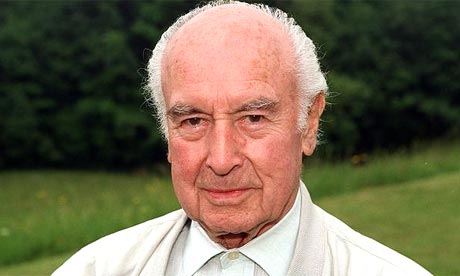
R.I.P. Albert Hofmann, 1906 to 2008


Rest In Peace, Albert Hofmann, 1906 to 2008. The father of LSD. 102 is pretty good for a psychaedelic adventurer:

http://www.guardian.co.uk/science/2008/apr/30/chemistry.drugs

This interesting little comic tells his story in an easy-to-read way:

http://phocks.org/stumble/lsd-history-comic/

Many folks have hypothesized that, without LSD, the modern computer age would never have received the required inspiration. LSD trips directly inspired the creation of, among other things, the computer mouse and the Apple Macintosh, according to this Wired news story: http://www.wired.com/science/discoveries/news/2006/01/70015?currentPage=all.

A further list of celebrities who have used LSD is here: http://www.nndb.com/lists/447/000085192/.

About his discovery, Hofmann once said:

"I think that in human evolution it has never been as necessary to have this substance LSD. It is just a tool to turn us into what we are supposed to be."


The complete text of his book, _LSD: My problem Child_, can be found here: http://www.psychedelic-library.org/child.htm

cheers,
~Garlynn

Monday, March 10, 2008

Stuff White People Like


This is probably the finest piece of urban anthropology concerning modern North American liberal white culture.

Here's the current list of Stuff White People Like, with my thoughts on each (as a bona-fide white person) of the Top Ten:

1. Coffee. Yup, it's true, white people like coffee. Personally, I went through a period (after starting on Coffee People's Black Forest Mochas -- soy, of cource, and triple) where I drank soy chai (I'm lactose-sensitive, not trying to watch my weight), and then for a while I drank yerba mate. But, now I have an espresso machine & grinder at home, and roast my own beans to make my own cappuccinos -- with hemp milk, 'cuz it froths better than soy. I still drink yerba mate in the afternoons, though. And yeah, as a guy I don't really admit to drinking coffee, but for a different reason -- I only drink soy/hemp cappuccinos, not straight coffee... for the most part. :-)

2. Religions that their parents don't belong to. Hmm, I think this may apply to Baby Boomers more than Gen X or Gen Y, given than mainly this applies to a drift away from traditional church-based Christianity, and once that drift has occurred, I'm not sure that successive generations really pursue the matter in a manner different from their parents.

3. Film Festivals. Yup, white people do seem to enjoy film festivals -- either in their own town, or somewhere else if they are satisfied with the local one(s).

4. Assists. For a minute, I thought the author was going to get homoerotic with this one, but no -- they were talking about sports, and claiming that white guys like to pass in basketball 'cuz they generally have a problem with dunking, and also are trying to make up for slavery.

Ooooooooooookay. Sure, whatever. I guess I'll buy that.

5. Farmers Markets. Yeah, white people dig these. Organic farmers markets, even better. With a pub serving microbrews nearby -- perfect!!

6. Organic Food. See above -- take anything, offer an organic version of it, and automatically you can charge a higher price and white people will gladly pay it. Paul Newman figured this out with Oreos (Newman-O's!) and he's been making money hand over fist ever since (but x% goes to charity!). Personally, I think that Whole Foods is just the only organic food option that most white people have, and they rave about it because it's better than Safeway. They like that it sells all kinds of organic stuff. If they had a better alternative (i.e. more local, less corporate), they'd shop there, but they don't, so they go to Whole Foods.

7. Diversity. But only, apparently, as it relates to restaurants (and definitely not when it refers to the drivers of the other cars in the same traffic jam as them). Ethnic food is great, and white people realize this. The same food all the time can get old. So, it's a constant juggle between Mexican food (burritos), Thai food, Japanese food, Chinese food (but only in a pinch -- this is a kind of second-rate ethnic food, mainly due to concerns about MSG and general lack of perceived quality), and if you're in a really diverse place

8. Barack Obama. Unless, of course, they prefer one of the white people running for that job. But, point taken -- white guilt might be the root cause of some of Barack's support.

9. Making you feel bad about not going outside. Yeah, as a white person, I always wonder -- why don't I see more black people (specifically) out hiking, camping or generally doing those back-to-nature types of activities? Do they just not get the general feeling of urban oppression and drive to spend some time in the forest? Is there some other explanation, like they really would just prefer to sit at home, watch sports, drink beer and play video games?

10.Wes Anderson movies. These movies, i.e. _The Royal Tenenbaums_ or _The Life Aquatic with Steve Zissou_, do seem to be a staple of current White Person culture. Personally, I liked the latter, but found the former to be a bit tedious and even boring at times. Whatever, they're just movies. Mindless entertainment. I much preferred _American Beauty_ in terms of being a message movie (message being, living in the suburbs and pursuing the classic vision of the American Dream is not all it's cracked up to be -- look, here's the dark side, or what really goes on).

Anyways, I just had to share this link, and my thoughts. Nice to have a meta moment with relation to the dominant urban liberal white culture, eh?

cheers,
~Garlynn

P.S. For those who don't wanna click, here's the full list:

#1 Coffee
#2 Religions their parents don’t belong to
#3 Film Festivals
#4 Assists
#5 Farmer’s Markets
#6 Organic Food
#7 Diversity
#8 Barack Obama
#9 Making you feel bad about not going outside
#10 Wes Anderson Movies
#11 Asian Girls
#12 Non-Profit Organizations
#13 Tea
#14 Having Black Friends
#15 Yoga
#16 Gifted Children
#17 Hating their Parents
#18 Awareness
#19 Traveling
#20 Being an expert on YOUR culture
#21 Writers Workshops
#22 Having Two Last Names
#23 Microbreweries
#24 Wine
#25 David Sedaris
#26 Manhattan (now Brooklyn too!)
#27 Marathons
#28 Not having a TV
#29 80s Night
#30 Wrigley Field
#31 Snowboarding
#32 Vegan/Vegetarianism
#33 Marijuana
#34 Architecture
#35 The Daily Show/Colbert Report
#36 Breakfast Places
#37 Renovations
#38 Arrested Development
#39 Netflix
#40 Apple Products
#41 Indie Music
#42 Sushi
#43 Plays
#44 Public Radio
#45 Asian Fusion Food
#46 The Sunday New York Times
#47 Arts Degrees
#48 Whole Foods and Grocery Co-ops
#49 Vintage
#50 Irony
#51 Living by the Water
#52 Sarah Silverman
#53 Dogs
#54 Kitchen Gadgets
#55 Apologies
#56 Lawyers
#57 Juno
#58 Japan
#59 Natural Medicine
#60 Toyota Prius
#61 Bicycles
#62 Knowing What’s Best for Poor People
#63 Expensive Sandwiches
#64 Recycling
#65 Co-Ed Sports
#66 Divorce
#67 Standing Still at Concerts
#68 Michel Gondry
#69 Mos Def
#70 Difficult Breakups
#71 Being the only white person around
#72 Study Abroad
#73 Gentrification
#74 Oscar Parties
#75 Threatening to Move to Canada
#76 Bottles of Water
#77 Musical Comedy
#78 Multilingual Children
#79 Modern Furniture
#80 The Idea of Soccer
#81 Graduate School
#82 Hating Corporations
#83 Bad Memories of High School
#84 T-Shirts
#85 The Wire
Thursday, March 06, 2008

Great, so now bicyclists=terrorists?

Yeesh, sometimes the guv'mnt will stop at nothing to seek ways to terrorize bicyclists:

http://www.cnn.com/2008/US/03/06/times.square/index.html?eref=rss_topstories

Because they had video of a bicyclist near the military recruiting center in Times Square that was bombed at 3am, they were stopping bicyclists for questioning who were riding through Times Square during the morning commute?

How much sense does that make?

If they had seen a car near the bombing at 3am, would they be stopping cars driving through Times Square during the morning commute?

WTF?

Cops are idiots.

Thursday, February 07, 2008

R.I.P. Sheldon Brown (July 14, 1944 - February 3, 2008)


OK, I know, every bicycling blog, organization or spammer on the planet has already beat me to the punch with a report, commentary or diatribe related the passing last weekend of the late, great Sheldon Brown into the great bicycle track in the sky.

But, as you regular readers of Underground Science (all three of you -- you know who you are) know, this blog is not the place to look for the scoop, for late-breaking news, or for information found here first and nowhere else.

Nope, Underground Science prides itself on getting the dirt to you last, or at least, well after some other folks have already posted on it about a thousand times. We like to be an entertaining and moderately useful secondary source. You can keep your primary sources in your a href tags, thank you very much!

So, in that spirit, I present to you some of my favorite aspects of the Sheldon Brown website.

First off, he was a pioneer in many fields of bicycling... including, as you may have noticed from the title photo of this post, riding a tandem solo, from the rear seat. He, in fact, built many tandems by combining two separate bicycles into one, and describes how to do so here. As he says, "If you are not already a tinkerer who can fix most anything that can go wrong with a bike, you are not ready to build a tandem. This design is best suited to teams with small stokers, because a large or even medium-sized stoker will likely feel cramped by the short rear top tube. In addition, the single-bicycle parts may not give good service with a heavy team."

He goes over in detail why you would want to do such a thing in the first place (ride a tandem, that is):

Why Ride A Tandem?

Riding a normal, single-rider bicycle is a very rewarding experience, but a tandem bicycle adds a whole new dimension to cycling. Different tandemists choose the long bike for different reasons:

* A tandem allows two cyclists of differing strength and ability to ride together, pleausurably. The faster rider doesn't need to wait for the slower one; the slower rider doesn't need to struggle to try to keep up with the faster rider.

* A tandem turns the basically solitary, individualistic activity of cycling into an mutual experience that may be shared by a couple.

* A tandem allows handicapped people who couldn't otherwise ride a bicycle to share in the joy of cycling.

* A tandem can allow a parent to share cycling at an adult level of speed and distance with a child.

* A tandem is the ultimate rush for cyclists who enjoy the sensation of high-speed cycling.

Whatever your reason for choosing (or considering) a tandem, this article will attempt to cover some of the things that every tandemist should learn.


Sheldon also was a huge advocate of fixed-gear bicycles, as well as fixed-gear tandems! And, as an experienced tandem Captain, he is well aware that a tandem is, in fact, a bicycle ridden by _two_ people:

The rear rider is commonly known as the "stoker." Other names for the rear rider include "navigator", "tailgunner" and "rear admiral" or "R.A." The rear rider is not a "passenger", but is an equal participant. The stoker has two main responsibilities:

* The stoker serves mainly as a motor. Since the stoker is not called upon to control the bike, this rider should be able to actually generate more power than the same rider would on a single bike. Depending on the strength and endurance of the stoker, this may take the form of a steady output or may be held in reserve. If the stoker is acting as a "reserve," it is OK to take it easy for general cruising, so long as the stoker can help out with a burst of power for the climbs. Since starting up on a tandem is a bit trickier than on a single, the stoker should apply as much smooth power as possble when starting up, to get the bike up to maneuvering speed quickly.

* The stoker's other major responsibility is a negative one: The stoker must not attempt to steer! Unpredictable weight shifts on the part of the stoker can make the captain's job much harder, and can lead to crashes, in extreme cases. The stoker should keep in line with the centerline of the bicycle, and lean with it as it leans through corners. When the stoker needs to shift position on the saddle, or adjust a toe strap, or take a drink, it is vital that they do so without disturbing the equilibrium of the bicycle. These activities should not be attempted at all while the captain is dealing with tricky traffic situations or narrow spaces.

The stoker can also do a bit of back rubbing now and then, as well as taking photograhs, singing encouraging songs, reading maps, etc.


He also includes advice on starting from a dead stop on a tandem, including "common incorrect techniques," including "The Cowboy Mount, which involves standing next to the bike, putting one foot on a pedal, then swinging the other leg over the saddle while the bicycle is in motion. Try this on a tandem, and you'll kick your stoker in the head!"

Sheldon Brown's most prized innovations often were released on April 1st. Since that's a little ways off, however, I'd like to present some of my favorites here...

If you've got a tandem, you might be tempted to ride it for a long while. Perhaps even overnight. But, you've already got the weight of two people on the bike. Why add extra stuff? Go credit-card touring! And if you do so, you might want to use Sheldon Brown's extra-light drilled-titanium credit card.

But, say you've got a baby... not a kid, but an actual baby, much too small to hide away in a trailer, much less plop on a seat and expect it to pedal. Then, you'd need a carrababy, to allow you to comfortably carry your child on the bicycle.

And finally, if adding a stoker to the back of your bicycle (by home-building a single-speed rear tandem addition onto it, of course) doesn't quite give you the speed increase you desire, if you travel mainly in north/south directions, you could use a Geomagnetic Booster device!

Rest in peace, Sheldon. You will be missed. Especially on April 1st. :-)

cheers,
~Garlynn

Tuesday, February 05, 2008

Super Fat Tuesday


Happy Super Fat Tuesday!

(Shouldn't need to explain it, but -- it's Super Tuesday, with primaries in ~24 states, as well as Fat Tuesday, which I will freely admit I know nothing about except that it's somehow associated with Mardi Gras and New Orleans. And, I dunno, probably Catholicism or something. I'm not going to even bother Googling it. Just tell me if you really want me to know.)

As an Oregonian reporting from the San Francisco Bay Area today, I've got a rather unique perspective to offer, I think. My day started off by hearing Senator Obama on the KFOG morning show (interview is archived here: http://media.kfog.com/kfog/barack_ms0208.mp3)... and finding out that all of the surviving members of the Grateful Dead turned out last night to do a benefit concert for him!

So, first the entire Kennedy clan (including California's first lady, the wife of the guvernator) -- then the Dead?

What's next, the Dead Kennedys?

(bad-dum-bum)

I've been asking everyone I talk to how they voted, or intend to vote. It seems to be about nine-to-one in favor of Obama.... now, that's of course a very slanted sample, but even a few weeks ago, a lot of people were on the fence. Now, they've decided... and some of them have been huge surprises to me! (Like my buddy, whom I thought was a Libertarian... but who told me that, in all reality, he's not a member of any organized political party. He's a Democrat -- to quote Will Rogers.)

Personally -- I'm an Oregonian, I don't vote until June. Not my horse race today.

But I do think it's interesting how much momentum Obama is picking up.

It reminds me of the time that Bill Clinton and Al Gore came to Portland for a rally in Pioneer Courthouse Square. I was in school then, and a bunch of us got excused from class to go down and check out the rally (hey, we were MLC'ers). It was the biggest... celebration... that I'd ever been a part of. People were so exuberant to have the opportunity to shake the hands of either of those great men! They were absolutely ecstatic about them coming to Portland, and appearing for free in Pioneer Square for everybody to meet & hear them! Especially after twelve years of Reagan/Bush (this must have been in 92...), it was so cathartic.

Maybe Obama has the charisma to bring about times like those again -- times of optimism and hope for the future, under a responsible new president who really inspires people to believe that he will make a change for the better. And maybe that's more important than Clinton's much-vaunted foreign policy and domestic policy skills. I don't know, but I do know that I'm very excited to find out what the results are of the elections today!

Yes, Obama's health plan is not as good as the Edwards plan, which Clinton basically copied. However, there's a good case to be made that if Obama is elected, Clinton may become Majority Leader in the Senate, so her health care plan could be the one that gets enacted after all, following the sausage-making of the legislative process. And I don't think that Obama would go so far as to veto over the details in a health care proposal.

So, as much as Krugman has been spilling ink (and bits) to poke holes in Obama's health care and other domestic policies (Social Security, etc.)... and I don't dispute that he's right... I don't think this election should be confined to one issue. And maybe hope, optimism and change really should count and be defining characteristics, as long as positions on the issues aren't absolute deal-breakers?

I'll conclude with a quote:

Clinton's great successes, the ones he and his wife tout on the campaign trail, were really the fulfillment of Reagan's principles. It was Clinton, after all, who declared, "The era of big government is over," and was able to back that up with actual decreases in the size of government. It was Clinton who actually balanced the budget, who reformed welfare. Reagan set the politics; Clinton played the steward. This is not, it should be said, an attack against Clinton. He governed in a difficult ideological atmosphere—in Reagan's America, not his own. And in Reagan's America, Newt Gingrich and his followers were intent on enacting a far crueler version of Reaganism. Clinton, sensing their threat, smartly co-opted their principles and refashioned them as part of a relatively progressive and unquestionably compassionate agenda. In doing so, he succeeded in making some admirable policy advances (the State Children's Health Insurance Program, a rise in the minimum wage, the expansion of the Earned Income Tax Credit) and staving off their most dangerous initiatives.

Hillary Clinton, similarly, means to govern within the ideological confines of the moment and to tirelessly work to implement better policy. Happily, compared to 1992, it is a moment more amenable to the progressive agenda, largely thanks to George W. Bush's eight-year project to discredit conservatism. (As John Kenneth Galbraith once said, "liberalism is, I think, resurgent. One reason is that more and more people are painfully aware of the alternative.") A talented bureaucratic leader may prove best able to press the advantage and transform sentiment into substance. And Clinton is, by all accounts, exactly that. Her understanding of the bureaucracy is deep, and her command of the relevant policy is masterful. Given the circumstances, she will push, with savvy and determination, for the best policies possible.

But she largely accepts the circumstances, or at least her inability to change them through the application of her own charisma. Obama, by contrast, focuses more on changing the circumstances in which the legislation is made. The promise of his presidency is less its capacity to change our policies than its capacity to change our politics. He is the more likely to address, forcefully and eloquently, a culture that accepts grotesque CEO pay and rampant inequality. She is more likely to push workable solutions aimed at curbing those blights. She promises to ride the bureaucracy; he promises to drive the mood. He promises to replace Reagan's vision of an individualistic economy with the progressive dream of an interconnected economy; she promises to work tirelessly to redress the inequities of our current economy. She promises to care for our economy; he promises to change its values. She wants to be the more liberal Clinton; he wants to be remembered as the progressive Reagan. To choose between them requires not so much an analysis of their policies as a judgment call on our politics. It requires deciding whether our country needs a talented steward or a visionary.
(from Ezra Klein's post today.)

Monday, January 07, 2008

The Housing Bubble and New Urbanism


There has been a lot of ink spilled (and bits, er, sent) over the housing bubble in the past few years. Paul Krugman famously pointed out that this bubble had two dimensions: 1) The Zoned Zone -- Coastal America, consisting of places like Los Angeles, Seattle, New York and Boston, and 2) Flatland -- the rest of America. The bubble largely is a phenomenon of The Zoned Zone dragging up the averages of the rest of the country, supposedly.

However, as the "Hissing Sound" gets louder, as the bubble deflates/pops/continues in time, it is becoming apparent that there is also a second dichotomy at work, within The Zoned Zone: Urban Centers/Urban Places vs. non-transit-served suburbs & exurbs. One recent opinion pieces asks if this is the End of Sprawl?

So, this is a question, for Professor Krugman and others who study this issue: What does this mean on a macroeconomic level for the national economy, the housing bubble and the building industry? Do proposals for "fixing" the bubble problem need to take into account such an urban/suburban dichotomy?

Specifically, if the central cities of San Francisco, Portland, New York, etc. can weather a burst in the housing bubble without sustaining too much damage, but if their non-transit-served suburbs will take the hardest hits, what does this mean for policy fixes? That is, there seem to be portions of the Zoned Zone that actually have characteristics of the Flatlands, i.e. plenty of housing was built and built and built, sprawling further and further away from the central cities, but the market characteristics of these places, influenced by their proximity to the Zoned Zone, experienced the same bubble-esque excesses.

Krugman points out that metropolitan areas like Los Angeles are experiencing housing bubbles larger than anything we've previously seen. Yet, within the San Francisco Bay Area at least, there is a wide disparity between places like Fairfield, where prices have fallen more than 20% already, and San Francisco, where prices are holding steadier (only falling 6% to 7% thus far). But even within the City of San Francisco, there are actually two housing markets -- one which consists of walkable urban neighborhoods served by high-quality transit (er, I mean, MUNI and BART), and the other, more suburban neighborhoods. And the more suburban part of San Francisco is also seeing 15%+ drops in home prices.

According to the NY Times, there are now more than 2.1 million vacant, unsold homes in the United States, representing 2.6% of the national housing stock -- apparently, a higher number than was ever seen during the housing crunches of the early 1980s or 1990s. But how much of this vacant housing stock is suburban in nature, and how much is located in more walkable urban areas served by high quality transit?

Do the suburbs themselves need to be re-tooled and rebuilt to allow their residents to live in homes that can be competitive on the housing market again? Is there a way to save the suburbs and exurbs?

If so, does this mean that, as a nation, we need to look at rebuilding our suburbs more along the lines of New Urbanism principles, specifically ensuring that, say, 90% of all residences are within walking distance of a neighborhood retail center (and thus can pass the "quart of milk" test, i.e. their residents can wake up in the morning and walk to a nearby store for a quart of milk without too much hardship before breakfast), and are served by high-quality transit that provides a true alternative to driving for some trips?

Should we look into re-building our country to be more like the image of post-war Britain, circa 1955, depicted in this video about bicycle excursions by train? With communities that do not intrude too much on the countryside, that are within bicycling distance of rail service connecting to the major cities, that offer economies sufficiently self-contained that they are not completely reliant on cheap fuel for their automobiles to keep their housing prices competitive?

I'm not arguing that there is no housing bubble for the central cities, the walkable places with good transit. However, currently Seattle and Portland are the only cities in the United States to not yet experience a fall in their housing prices over the past 1-year period. And even these cities are now seeing month-to-month housing price declines, though still of less than 1%. What I am saying, however, is that it is likely that central Portland will retain more value than, say, suburban Wilsonville or Salem; that central Seattle will retain more value than, say, Bellingham; and that central San Francisco will retain more value than, say, Fairfield. And this is because, as fuel prices rise, the Baby Boomers age and retire, and people have fewer children, more folks will want to live in walkable places where they don't have to drive for every trip, and fewer are going to want to be isolated in suburbs where the automobile is their only mode choice for just about every journey.

And I'm asking, what does this mean for the future? How should we plan to deal with this? What policy implications might it have?

Saturday, December 29, 2007

Why Obama Needs to Change Course NOW

Or, Why I Won't Vote for Obama in the Primary, but if he wins the Primary anyways, will still support him in the general election.

There has been an ongoing feud between Barack Obama, the candidate for the Democratic nomination for president, and Paul Krugman, the NY Times columnist and eminent economist who was almost the only progressive voice in the mainstream media immediately after 9/11. It basically boils down to Krugman saying that Obama is not progressive enough on the important issues, and Obama not responding in any meaningful way at all, but rather his campaign ignoring the issues and attacking Krugman personally (or otherwise just evading the issue) instead.

It's all best explained here:

Obama stump speech strategy of conciliation considered harmful at http://www.correntewire.com/obama_stump_speech_strategy_of_conciliation_considered_harmful

Here's a great teaser quote:

Shorter Candidates

Obama: The system sucks, but I’m so awesome that it’ll melt away before me.

Edwards: The system sucks, and we’re gonna have to fight like hell to destroy it.

Clinton: The system sucks, and I know how to work within it more than anyone.


So, please go over there to read the full article, and let me know what you think in the comments.

Tuesday, December 11, 2007

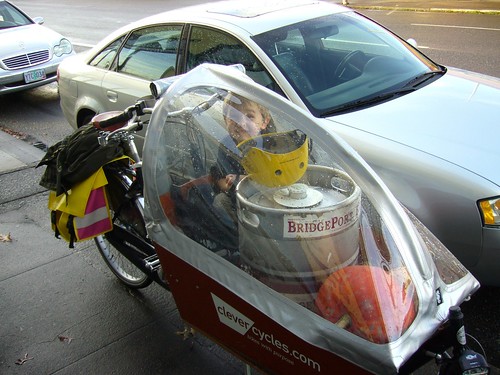
Bakfiets: The station wagon of bicycles


Bakfiets (plural: "bakfietsen") came out of the Netherlands -- thus the funny name, which means "wagon bike" (and can be shortened to simply "BAK"). But bakfietsen are now available in the United States, through Clever Cycles, a distributor and retailer in Portland, OR. There are also plans to manufacture a lower-cost, American-made version of the bakfiets in NE Portland. And, apparently there has been a version called the "Long Haul", made in Eugene, Oregon (already American-made!) for some time now.


A bicycle that can haul a kid, a keg of beer *and* a bag of groceries -- at the same time? I'm in love. Here are some features of the original Dutch version:

* Super-strong wheels.
* Hub generator lighting, front and rear. Light sensor turns on automatically; rear light stays on at stops.
* Drum brakes: low-maintenance and unaffected by weather.
* Stainless steel mudguards with flaps (just like on a semi truck, baby -- but you'll have to make your own design). ;-)
* Tie-rod linkage steering geometry: to handle large loads with remarkable lightness.
* Can be stored outdoors, in the rain and sun, for decades, due to an anti-rust primer under a tough powder-coat.
* Front cargo area ("bak") made of marine plywood: puts the load low and centered for easiest handling.
* 180-lb load rating. That's a lot of weight!!! More than a keg of beer, a small child and a bag of groceries.
* To keep the cargo dry in all elements: Weather canopy option makes this a true year-round urban (family?) vehicle.
* 4-point (kick-)stand for easy loading and unloading. Passengers climb in and out without tipping!
* Step-through, one-size-fits-most frame supports upright posture for a commanding view and supreme comfort; easy to put a foot down at stops.
* 8-speed Shimano Nexus gearhub. Shift to any gear while stationary or moving. Sealed mechanism is essentially maintenance-free.
* 305% gear range, comparable to 11-34 derailleur gearing.
* Wheel lock with auxiliary chain option for secure parking (no need for a separate U-lock, though you'd have plenty of room to carry one if you wanted to!)
* Full chaincase (guard) to keep your clothing and your kids’ fingers safe and clean; reduces chain maintenance to near zero.
* Coat/skirt guard and rubber block pedals: wear whatever you want without worry
* Overbuilt rear rack with bungees. 70-lb. load rating (that's separate from the 180 pounds you can carry in the front)

Now that's a bak that I'd love to ride!!!

Thursday, November 15, 2007

New cars -- lots of poor options. New bikes -- lots of great options!!


So, in the past year in the USA, more bikes were sold than cars. Maybe it's because most new cars these days pretty much suck (poor gas mileage, wars required overseas to provide fuel, expensive for any level of durable quality, high maintenance costs beginning 5-7 years after purchase, etc.), whereas there are a LOT of really good options for new bicycles! For what you would spend for about two to three months worth of payments and insurance for a new car, you can get yourself set up with a *really* nice commuter bicycle.

In the past year especially, there has been a veritable explosion of excellent upright-style bicycles (think Amster-bikes, old Schwinns & Raleighs, etc.) released, packed with the latest in new bicycle technology. Shimano has a new automatic "transmission" for the bicycle, called the "Coasting," which does the shifting for you in the rear hub. Excellent! There are also other, manual-shifting bicycles where the gears are still internal to the rear hub. Why is this so cool? Because it makes it easy to tuck the chain away for good behind a chain guard, which saves your clothes from grease or rips due to contact with the chain.

These have also been lots of advances in lighting technology, including new automatic lights that are powered by dynamos (the motion of the bicycle wheels produces their electricity), that remain on even when you come to a stop, and that turn on automatically when it gets dark!

In short, there has never been a better time to get a new bicycle for cruising around town, commuting, or otherwise just enjoying the pleasures of human-powered two-wheeled transportation. I'm serious. You've got to check these bikes out to believe it. I'm not getting paid to say this -- it's true. And these bikes are selling for between $400 and $800, for the most part, plus taxes and whatever extras/accessories you want/need to throw in -- which is an incredibly good deal!!!

So, without further ado, I present to you my recommendations, so that you can go and test ride a bunch of them, and pick your favorite:

Raleigh Coasting (automatic shifting):
http://www.raleighusa.com/page/items.itemid.421

The Original Dutch City Bike, Jorg & Olif: (only $545!) ***!!! (automatic shifting)
http://www.jorgandolif.com/#

Trek Lime (automatic shifting):
http://www.trekbikes.com/us/en/bikes/2008/urban/lime/limelite/

Schwinn Cruisers:
http://www.schwinnbike.com/products/bikes_category.php?id=136

Giant Suede Coasting DX (automatic shifting):
http://www.giantbicycle.com/en-US/bikes/lifestyle/729/29315/

Breezer Uptown (great all-around package):
http://www.breezerbikes.com/bike_details.cfm?bikeType=town&frame=d&bike=uptown

Available at REI:

Electra Townie:
http://www.rei.com/product/735021

Novara Fusion:
http://www.rei.com/product/744803

My recommendation definitely goes to the Jorg & Olif — I didn't realize their prices were so affordable!! However, the Breezer also looks wonderful, and I would love to test ride all of the bikes listed here. Schwinn probably has the weakest lineup, surprisingly, but they're still worth mentioning because they're less expensive on average.

Other bicycling pages:

BikeTown:
http://www.bicycling.com/biketown/home.html

Shimano Coasting home page (this is the automatic shifter lifestyle page):
http://www.coasting.com/publish/content/coasting/sac/en/home.html

So, if you don't yet have a nice bicycle that you feel comfortable hopping on and riding around town every day, I think it's time you consider changing that. Do your research, check out these links, go test ride some of these great bikes, and purchase one. You'll love it for life. Guaranteed. Just make sure that you test ride a bunch before you make your decision... it's fun, and then you'll know more about the one that you ultimately do decide to buy, and you'll feel good about your decision!

Happy bicycling!

cheers,
~Garlynn

Thursday, November 01, 2007

Raise Fuel Economy Standards NOW: Click & Clack Weigh In


The House and the Senate are currently considering their competing proposals to raise fuel economy in the U.S. to around 35 mpg by 2020 (or, something like that, depending on which version you're reading).

Click and Clack, the Tappett Brothers, aka Tom and Ray Magliozzi, have just sent a letter to the House Select Committee on Energy Independence and Global Warming, claiming that Detroit can actually achieve a fleet-wide average of 35 mpg within just FIVE years! This has made the Select Committee quite happy, or so it seems from this press release:

http://globalwarming.house.gov/mediacenter/pressreleases?id=0111

Tom & Ray are quite witty in their letter, but they pull no punches. They mention enough relevant, existing technology to leave no doubt in the reader's mind that, indeed, Detroit not only can achieve a 35-mpg standard within 5 years, but it is in its own best interest to do so, and furthermore, Detroit has a long history of being on the wrong side of pretty much every battle involving Congress and the safety/efficiency of its vehicles.

Go ahead and read the original letter, at this link (pdf):
http://globalwarming.house.gov/tools/assets/files/0160.pdf

I completely support Tom & Ray, and would love to add my signature to their own. Congress should require 35mpg by 2012, and 1mpg increases annually between then and, say, 2035. Not only would this be well within the range of engineering possibility for that time frame, it would revolutionize the domestic auto industry, and perhaps even help it turn around and recover from the tens of thousands of worker lay-offs that it has been "forced" to undertake recently.

Read the letter, and let me know what you think!

cheers,
~Garlynn